The Cecil Paper Mill
The following is an excerpt from Winter 2026 edition of The Octoraro Loop.
The Cecil Paper Mill
By Eric Lorgus: Camp Staff 1966-73, 76-77
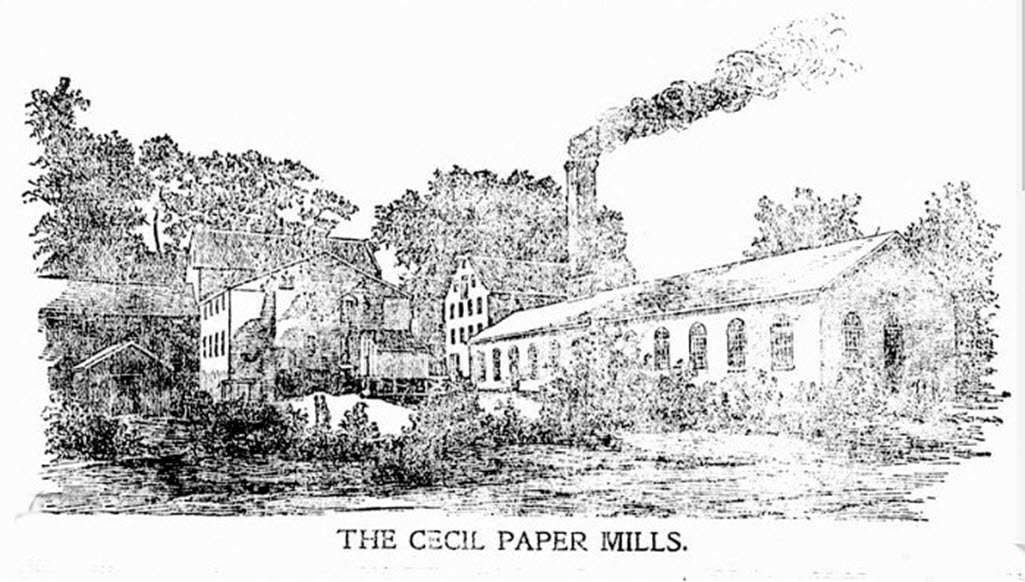
For those who remember the old camp road, just inside the camp gate were the ruins of an old mill. All that remained was a small concrete building and the mill race. As I drove by, I wondered if the concrete building had ever been used by the bootleggers who once inhabited that area.
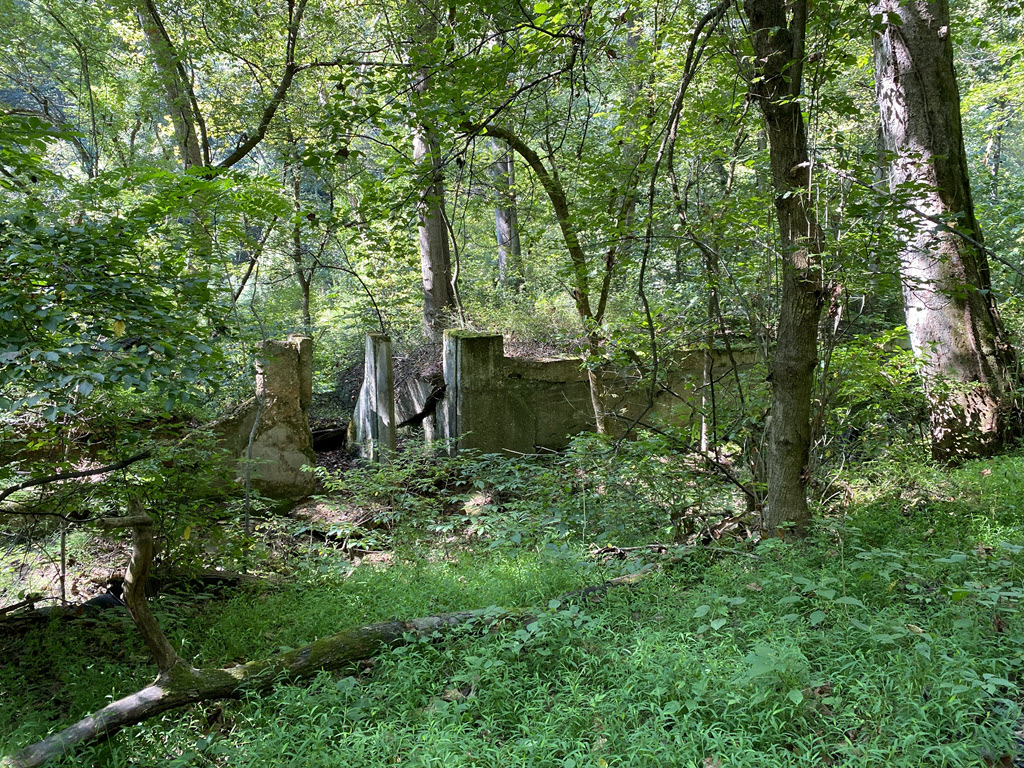
What I never realized was that this spot was once a bustling industrial center. Around 1791 an iron forge was established on 3,000 acres just south of the Horseshoe Bend on the Octoraro Creek. The 1820 census reported its name to be Frey’s Forge. At that time it employed 50 men who operated two forges, four bellows, and a slitting mill.
In 1871, the old forge property was sold and became the Cecil Paper Mill. By September 1873 a new mill building was producing 12 tons of manila paper per week. Cecil County once had seven paper mills, but all the others were on the Little Elk Creek.
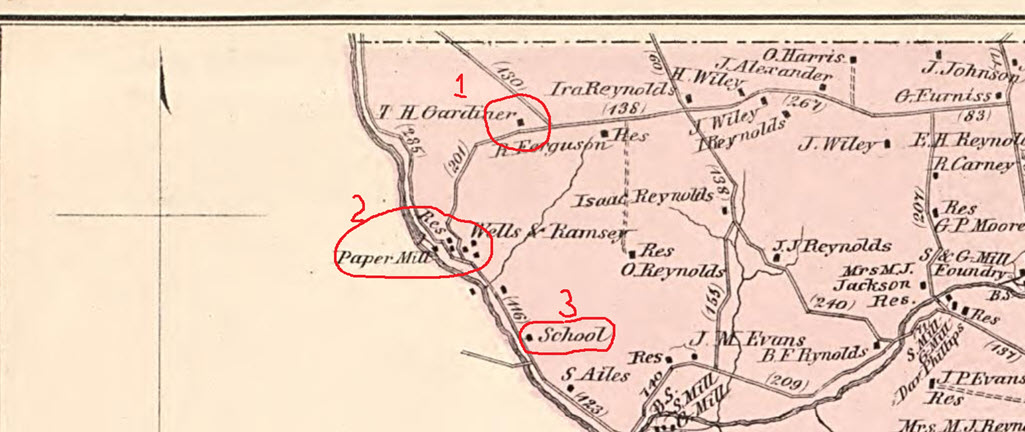
2. the old mill, 3. the old school
While the mills on the Little Elk had rail service, the Cecil Paper Mill was accessible only by a road that ran from Ridge Road (now the camp entrance) down to the old Camp Road just outside the camp gate. Present day maps still show the path of this road which was used by six mule wagons back in the day. In 1859, a covered bridge was built a mile south of the mill, which is likely when a road was built from the mill to it. That bridge was destroyed by the June 1884 flood and replaced with a pin-connected, 9-panel Pratt through truss iron bridge that still stands today.
Historical records show that by 1877 the mill had 20 employees with machinery running full-time. Over the next decade many improvements were made with machinery replaced with larger, heavier boilers and turbines. Output increased to 14 tons per week.
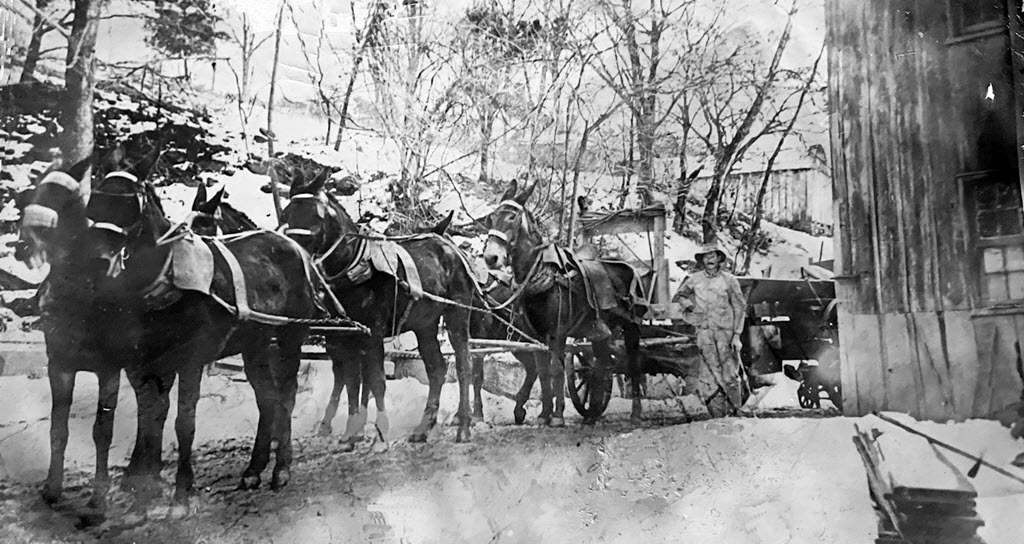
c. 1899. An employee of Cecil Paper Mill. By Kara Reisler.
But in 1888, the business was put up for sale and there was evidence things had slowed down. The acreage had decreased from 150 to 68 and there were only five tenant houses. A new owner ran it until 1899 when it went into bankruptcy to resolve its debts. The mill closed and laid off its 25 employees. In May 1901 it was auctioned to a Charles Egan and became the Cecil Paper Company. Egan made extensive improvements including two new waterwheels.
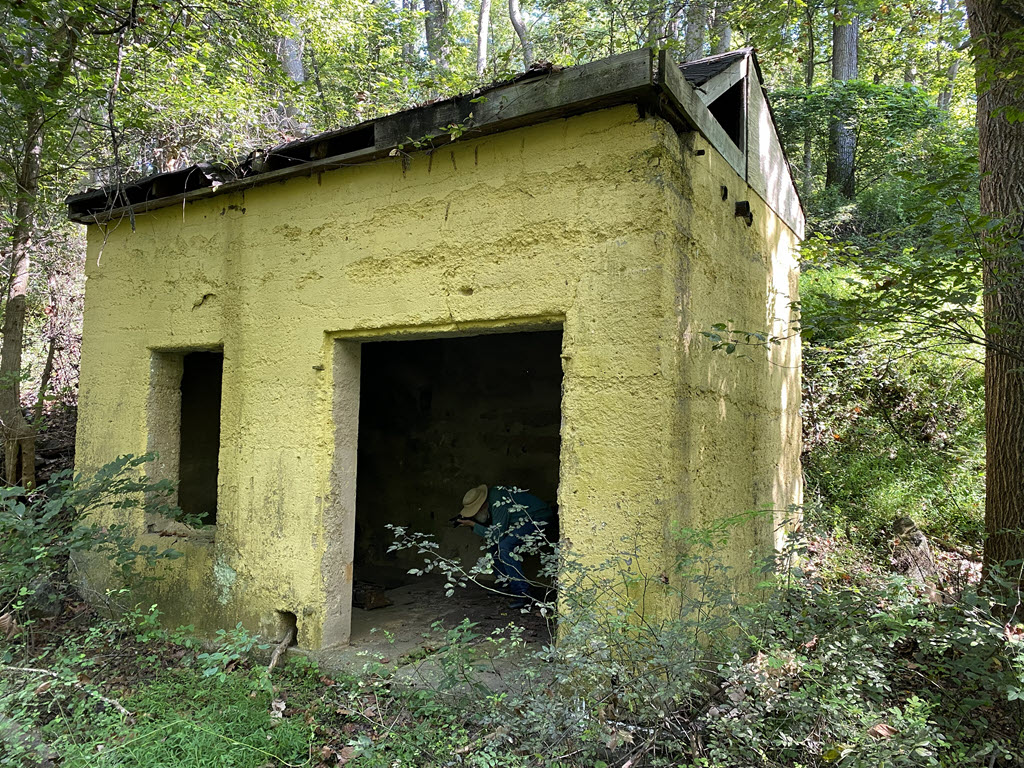
Is there an Archeology merit badge?
Then came the Octoraro Water Company. What made this site perfect for a mill was an 18-foot fall on the Octoraro Creek. There is little evidence of that today because of a dam and reservoir built upstream in 1951. However, around 1905 the water company began pumping water from the Octoraro which caused the mill to shut down periodically due to low river flow. Newspaper accounts in 1916 indicate the mill had been closed “for some time past” when it reopened briefly. By January 1920 it reopened again, after having been shut down and practically stripped of its machinery three years prior. The mill now would make wallpaper for the Sears, Roebuck and Company.
In the Midland Journal on April 21, 1933, the final demise of the mill was revealed. The heavy stone walls of the mill were dynamited. At that time the mill had been abandoned for years and was sold for back taxes two years prior.
Guess who bought it? The Chester County Boy Scouts.
What is remarkable is that the mill lasted that long. By 1900, most traditional water-powered mills had either shut down or converted to steam.
I remain curious about what’s left. The small building that remains is poured concrete, not brick. This suggests it was built in the 20th century. Amazingly, it still has a wooden roof, so someone has maintained it since the demise of the mill.