

Exhibit Details
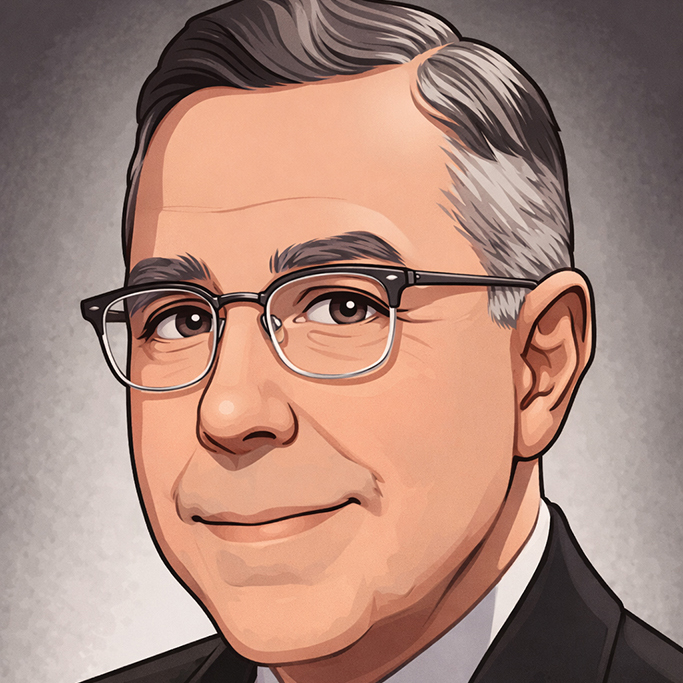
Ernie Heegard was a monumental figure in HSR and Chester County Council history, serving 29 years as Camp Horseshoe Director, 28 years as Octoraro 22 Lodge Adviser, and Scoutmaster of Troop 78 for 40 years. His service to Scouting was more than 75 years. He was a friend, mentor, leader, teacher, and the embodiment of Scouting in Chester County Council.
This exhibit was first opened on June 25, 2024, which is the 36th anniversary of the first pageant held at Achgeketum Fire Circle – named in honor of Ernie Heegard – on June 25, 1988.


Ernie Through the Years
Display Details
This display shows Ernie in various roles, responsibilities, states of emotion, and leading events and programs through 78 years at Horseshoe Scout Reservation


Ernie Guides…
Display Details
In Winter 2023, Ernie Heegard guided Troop 78 Scouts around Camp Horseshoe for a tour of various areas in the Southern end of camp and recorded his knowledge for posterity.
Tour of Browning / Kindness Center
Ernie Heegard gives a tour of Browning / Kindness Center.
2023 – Contributed by Andrew Coe
Tour of the OA Bridge
Ernie Heegard gives a tour of the OA bridge.
2023 – Contributed by Andrew Coe
Tour of the Mason-Dixon Marker – Part 1
Ernie Heegard gives a tour of the Mason-Dixon Marker at Camp Horseshoe.
2023 – Contributed by Andrew Coe
Tour of the Mason-Dixon Marker – Part 2
Ernie Heegard gives a tour of the Mason-Dixon Marker at Camp Horseshoe.
2023 – Contributed by Andrew Coe
Tour of the Heistand Pool
Ernie Heegard gives a tour of the Heistand Pool.
2023 – Contributed by Andrew Coe
Tour of Eagle Grove
Ernie Heegard gives a tour of Eagle Grove.
2023 – Contributed by Andrew Coe
Tour of the High Water Mark
Ernie Heegard gives a tour of the high water mark at Camp Horseshoe.
2023 – Contributed by Andrew Coe
Tour of Schramm Lodge
Ernie Heegard gives a tour of Schramm Lodge.
2023 – Contributed by Andrew Coe
Ernie Sings..
Display Details
Ernie had a lot of talents that he shared with the Scouting family, including his penchant for breaking into song.
Former Camp Director Ernie Heegard sings a rousing song that got the audience involved at the 16th annual HSRAA Reunion.
2015 – Contributed by Andrew Coe
G. Ernest Heegard sings “Zumgali Gali” at the 17th Annual HSRAA Reunion.
2016 – Contributed by Andrew Coe
Former Camp Director G. Ernest Heegard entertains the audience with a rousing rendition of “My Brother Bill” at the 18th Annual HSRAA Reunion.
2017 – Contributed by Andrew Coe
Ernie Heegard leads a song and conducts and audience at the 2021 HSRAA Annual Reunion.
2021 – Contributed by Andrew Coe
A fixture during Sunday Lunch during weeks 1 and 2, Ernie Heegard sings the old favorite “Green Grow the Rushes”.
2016 – Contributed by Anonymous
Ernie Says…
Display Details
Ernie Heegard shares his extensive knowledge of Horseshoe Scout Reservation in the form of articles and speeches.
Narratives
2007 – Contributed by G. Ernest Heegard
The following article by Ernie Heegard was originally published in the ‘Ernie Says’ column of the Summer 2007 issue of the Octoraro Loop.
In More than sixty years have passed, but the memories of my first week at Horseshoe for summer camp are just as vivid today as they were that first summer in my Stockade campsite.
After arriving at Horseshoe, I dashed off to the front porch of the White House to check in, then out the back door to join some other Scouts bound for the Kit Carson Stockade, our camp-site for the next 2 weeks. Each camp-site (or stockade as they were called in the early years,) was named for a key person or place in history. The names and buildings have not changed over the years, and have been wonderfully maintained by the Order of the Arrow.
The five original sites were constructed of cypress wood, consisting of a leaders’ cabin flanked by four bunk houses – each with only a back wall and 2 canvas roll-down sides. Sherwood Forest was on top of the hill and named for Robin Hood’s hide-out. Then proceeding down (or south) along the stockade trail (the upper part of this trail is paved and part of the loop road), you encounter the Boonesboro Stockade named for Daniel Boone. Further on the trail, is the third stockade, Kit Carson, named for a western pioneer. The remaining two camp-sites are: Davie Crockett, named for a famous woodsman; and Bayard Taylor, a Chester County legend.
The Taylor stockade straddles the Mason-Dixon Line, separating Maryland and Pennsylvania. This dividing line actually passes through the middle of the leaders’ cabin, leaving half of the group sleeping in Maryland, and the other half sleeping in Pennsylvania.

Each stockade was staffed by a college student, with a strong Scouting background, and employed as a “provisional” troop leader for the summer. Scoutmasters rarely attended camp, but would drop by from time to time. Most Scouts came to camp as individuals, or with 3 or 4 from the same troop, depending on their choice of camping periods.
A Scout’s first Sunday at camp was jampacked with many things to be accomplished – preparing your bunk by filling a canvas sack with straw, hiking to the pool for a swim check, and orienting ourselves with a quick guided hike around the camp.
Upon returning to Carson we quickly donned our uniforms for inspection. The Scouts required a bit of adjusting by our leaders to form this diverse group of individuals from many different troops to look like a cohesive, functioning Scout troop. A few extra minutes were then spent learning the Kit Carson Stockade song: “Over hill, over dale, As we hit the dusty trail, To Kit Carson, the best camp of all!……..” and a couple of cheers for the ‘song and cheer challenge’ which awaited us following that evening’s meal.
We were then led to the parade field, which had to be cleared of any remaining cars, in order to allow each troop to practice marching. Each stockade leader stressed a good showing during the ceremony of ‘lowering the flag’. I’m sure we did not win retreat that night, but I do remember almost jumping out of my skin when the canon was fired!
After the opening camp-fire that evening at the Natureheart staff site, a small tenting area for the nature and kitchen staff, we returned to the Carson Stockade for clean-up and Vespers. All eight bunks were filled in our bunk house.
Prior to “Taps” being sounded, all the Scouts were seated on the porch-ends while our leader and his assistant gave an inspirational thought for the day. The camp chimes seemed to be perfectly timed to the final words of our leaders and were played from a small wooden tower located in what is now the campcraft area. While were climbing into our bunks, the camp bugler played Taps, which echoed around the hills of Horseshoe. Very exhausted, we all drifted off to sleep listening for the sounds of the whip-o-wills.
Not the next day, but a few days later, was the cooks’ day off. The kitchen was closed, but each patrol/bunkhouse had to send one Scout to the dining hall to pick up the food for breakfast. It had rained overnight, but was still intermittently showering. The side flaps on our bunkhouse were rolled down, protecting the bunks from the rain, and afforded us some cover for what we were about to do. Our instructions were to gather wood to build a fire in order to boil water for oatmeal and raisons, and then fry eggs and bacon, all to be done after the food arrived. Instead, we hastily employed the “democratic process” and took a vote! It was unanimous – no one wanted to venture forth for fire-wood, build a fire, or cook in the rain.
Clinton, a bunk-mate from Troop 50 or Berwyn 11, came to camp well equipped, and drew from his pack a small heat-tab stove, and so began the slow process of each of us frying our eggs and bacon in our own mess kits. We planned to skip the oatmeal. The bunkhouse porch afforded protection from the rain and the long tarp shielded us from view from the leaders’ cabin. No sooner had the cooking begun . . . . who should appear from out of nowhere, but the impressive figure, MR FRANK BEAM, the Camp Director!
He was in full uniform, raincoat and broadbrimmed campaign hat! The scene on the floor of the bunk house must have been incredible – 8 scruffy young Scouts, with mouths gaping, crouching around a tiny collapsible stove merely 5 inches by 5 inches emitting a little blue flame coming from a white pill, which looked like a slightly oversized Alka-Seltzer tablet. WELL!!!!!! Mr. Beam was not going to let this pass.
The next 45 minutes he gave a highly personalized course on dressing for the weather, collecting squaw wood (small dead wood hanging in the vines), fire-building, and cooking the entire intended breakfast, not to mention the finer techniques of clean-up. The totally embarrassed eight of us all had to agree at the camp director’s urging, “Wasn’t that a better and more Scouting way of doing breakfast?” Looking back, many important life’s lessons were learned that early rainy morning. Thus, the first of many, many lasting memories of stockade life.”
The following article by Ernie Heegard was originally published in the ‘Ernie Says’ column of the July 2004 issue of the Octoraro Loop.
2004 – Contributed by G. Ernest Heegard
Thirty years after Camp Horseshoe Scout Reservation opened in 1928, there finally was a telephone in camp connecting them to the outside world. Part of the thinking of that time was “to keep the camping experience isolated and more primitive.”
Throughout the 1940’s, field-phones were first introduced to camp. They were the old Army surplus crank-to-ring fieldphones. These phones in canvass bags were strapped to the walls and connected headquarters, White House, dining hall, and health lodge to each other. This proved to be a huge improvement over the ‘walk’ or ‘shout’ method employed throughout the 1930’s.
All incoming calls prior to 1958 were relayed by the Cole’s (the camp rangers), who took emergency calls on their own multi-party-line phone in Maryland. Orders for supplies and food, along with communications to the Council office had to be done at the Rising Sun Phone Company, which was next to the Catholic Church in Rising Sun, usually in conjunction with the town run.
During the summer of 1958, Troop 6 of West Chester donated our first real camp telephone to the outside world and dedicated it to the memory of Robert Mackey, an Eagle Scout from their troop. Shortly after that, the “OCTORARO PHONE COMPANY” was formed. This was the creation of Joe Knipe and Fred Conner, along with Tom and Leonard McCabe, and many others of Octoraro Lodge 22, Order of the Arrow. Stock shares were printed and sold to acquire wire and equipment for a better in-camp phone system. The first switchboard was a huge olive-drab box with five or six rows of switches and drop-down signals. Wires were strung throughout camp and phones were installed in most buildings. This launched Camp Horseshoe into the 20th Century. A slightly illegal jumper connected the outside line to the switchboard enabling our Scout operator to patch incoming calls to any phone in camp. He also was able to route calls between in-camp phones.
As time went by, newer equipment was added with the help of additional leadership – Bob Thomas, John Dinsmore, Ray Gentile, and Al Forssmark. Most of these new workers were also employees of Ma Bell.
Within the last few years, the old AT&T switchboard was replaced by a modern electronic switching system that included both Camp Horseshoe and Camp Ware. This new system allowed each extension to directly dial any other phone on the Reservation. This new equipment was the direct result of the efforts of John Ruble, Sam Cole, Bill Walsh, and Mike Slictur.
Thanks to all those men who over the years have paved the way for all of our 15 phone lines and 50 extensions, making it a sophisticated phone system… The Scouts and Scouters of Camp Horseshoe and Camp Ware owe a real debt of gratitude to all these men and their untold army of helpers who install and update the property of the “OCTORARO PHONE COMPANY”. If you still hold some of the early fund-raising stock certificates of this flourishing company, keep them in a safe place for dividends might be just around the corner.
This article by Ernie Heegard first appeared in Volume 1 – Issue 3 of the HSRAA newsletter, The Octoraro Loop.
2000 – Contributed by G. Ernest Heegard
Have you ever been somewhere and one of your senses triggers a sudden flash of a pleasant recollection of summer camp? It may be a sound, a smell, or a picture. This frequently happens to me when I see sunlight streaming through the trees and woods early in the morning when the moisture-laden air produces those glistening spears of sunlight. It is then I am instantly reminded of those Sunday morning strolls up the Chapel trail through the tall pines for the Sunday Church Service. But most often, it is a sound that triggers this type of response. One of my favorite songs or tunes sounding over the PA system prior to mealtime gets me thinking about summer at Horseshoe.
I am not alone in having a particular sense stimulating a flashback. Last summer I mentioned this feeling of flashbacks to Steve D’Antonio, Scoutmaster of Troop 78. Steve explained that he, too, often gets flashes. However, he has carried this theme a step further. As he drives to Camp for an OA weekend or to summer camp, he plays tapes of John Philip Sousa’s marches, the type that are played prior to the Retreat ceremony at camp each evening. Steve added that his son Bret and another Scout, Jeff Hart, also appreciate the musical reflection.
As I reflect on some of the memorable sounds of camp, I can’t help but think of some that passed from the present camp scene…those, which spur their own special images in my memory. Oldtimers may recall, as I do, the snapping sound of a game of checkers when passing the second floor porch of the old Allen Memorial Dining Hall. It was here where Charley and Percy Henry (longtime cooks at Horseshoe) would while away their evenings playing their favorite and fast game dressed in their pajamas. Or, for others who may have experienced it, who could forget the sounds of chimes echoing through the woods from the chimes tower – a small elevated wooden gazebo – which was just off the Boonesboro trail (now the Campcraft area). It was here that “Dusty” Rhodes would climb the ladder each evening and hammer out tunes by lantern light for fifteen minutes before Taps was sounded.
When the new Camp Headquarters was completed in the 1947 season, Louis Lester, then Scout Executive, saw to it that the new belfry was outfitted with speakers and, within the building, an amplification system and record turntable. 78- speed records, then state of the art, replaced the chimes. Campers were then treated to Jan Pearce’s singing of “The Lost Chord,” “Bluebird of Happiness” or “the Lord’s Prayer” and to other vocalists of the day as one drifted off to sleep in his bunk at night. The PA system also replaced the large metal megaphone that hung on a frame at the head of the Parade Field. The Camp Bugler had used this megaphone to direct his bugle call in different directions, requiring him to repeat the calls several times. Howard Hutton, Camp Bugler in the mid ’40’s really appreciated the new PA system.

Along with the speakers in the headquarters’ belfry, a large brass bell replaced the old fire gong that hung near the rear of the Dining Hall. Here, a cedar frame with a section of a railroad wheel suspended by chain and struck with a hammer produced the fire alarm. The most coveted assignment was the fire wagon crew. The fire wagon was parked at the head of the Parade Field. It was a small red trek cart with large metal wheels and was pulled by four staff members. The cart was filled with Indian fire pumps, canvas buckets, fire rakes and shovels – complete and ready at the alarm!
The sounds of camp are around you each time you return and new ones are being created each year: sounds of “Green Grow the Rushes – Ho!”, “The Cat Came Back” or #95 “Al-le-lu-ia” in the Scouts’ Worship book; a roar from the crowd at a Water Carnival or a Paul Bunyan Meet; the echo of Taps at a campfire in the bend of the Octoraro; and so on.

Wonderful things in the Camp program have and continue to open our senses. These now evoke our best memories of some of the best summers in our lives. We all should remember that most of our favorite memories were not by chance. We have many, many talented and dedicated Board members, professionals, leaders, staff members and OA members to thank for creating a camp worth remembering.
A special thanks to the year 2000 Camp Horseshoe and Camp John H. Ware 3rd staffs for carrying on the traditions of creating more and more great sights and sounds for the Scouts this year.
The sounds and reflections of camp are so simply and aptly put in the chorus of our Camp song:
“They built a camp upon the Mason- Dixon Line.
Historic land where values shine Old Horseshoe your memories will ‘er be mine
In the loop of the Octoraro bend.”
Videos
Eric Lorgus and Ernie Heegard discuss the origins of Horseshoe, in particular the founding of the Camp Horseshoe Pool.
2023 – Contributed by Andrew Coe
Ernie Builds…
Display Details
Ernie enjoyed working with his hands as he was a technical education teacher for many years, and he put that skill to good use at HSR.
Here we see the program director cabin being framed in, with paneling, electricity and much more to come. Ernie Heegard leads the charge.
2015 – Contributed by Andrew Coe
Ernie as Memorabilia
Display Details
Ernie Heegard was enshrined in some memorabilia that has been issued over the years.
Honoring Ernie
Display Details
For his tireless service and dedication to Scouting for nearly 8 full decades, Scouts and Scouters have shown their appreciation by honoring Ernie Heegard at various functions.
Various speakers share their thoughts about what Ernie Heegard means to them, Scouting and HSR at the 10th Annual HSRAA reunion in 2009.
2009 – Contributed by John B. Rettew III
John Souder shares his numerous thoughts about what Ernie means to him, Scouting and HSR at the 10th Annual HSRAA reunion in 2009.
2009 – Contributed by John B. Rettew III
Various speakers share their thoughts about what Ernie Heegard means to them, Scouting and HSR at the 10th Annual HSRAA reunion in 2009. He also shares a few of his thoughts about the whole experience.
2009 – Contributed by John B. Rettew III
At the 2023 HSRAA Annual Reunion, reunion chairman Mark Siegle reflects on the enormous service and leadership of Ernie Heegard over the years at Camp Horseshoe.
2023 – Contributed by Andrew Coe
At the 2023 HSRAA Annual Reunion, Eric Lorgus reads a letter from former Aquatics Director Phil Swab and it chronicles the kind of leader Ernie Heegard was as Camp Horseshoe Director.
2023 – Contributed by Andrew Coe
This film, which was put together to celebrate Ernie Heegard’s contributions at HSR, shows many different scenes of Ernie in the dining hall, the parade field, and other locales.
1991 – Contributed by Andrew Coe
Ernie Heegard Celebration of Life
Display Details
The Ernie Heegard Celebration of Life took place at Camp Horseshoe on June 22, 2024. The event included a religious service at Schlaanstine Memorial Chapel, a pageant at Achgeketum Fire Circle, and a reception at the Allen Memorial Dining Hall.
Pictures
Videos
The Celebration of Life service was held at the Schlaanstine Memorial Chapel on June 22, 2024.
2024 – Contributed by Andrew Coe
The Achgeketum Fire Circle ceremony consisted of opening remarks from Camp Director Ethan Bilson, a traditional Saturday evening pageant, remarks from Mark Siegle and A.J. DiAntonio, and the traditional closing song “In the Loop of the Octoraro Bend”.
2024 – Contributed by Andrew Coe
Logan Duff delivers remarks related to Ernie’s impact on Troop 78 at the Celebration of Life for G. Ernest Heegard.
2024 – Contributed by Andrew Coe
John Souder delivers remarks related to Ernie’s impact on Troop 78 at the Celebration of Life for G. Ernest Heegard.
2024 – Contributed by Andrew Coe
Bob Matje Jr. delivers remarks related to Ernie’s impact on Octoraro Lodge 22 at the Celebration of Life for G. Ernest Heegard.
2024 – Contributed by Andrew Coe
Matt Christenson delivers remarks related to Ernie’s impact on Octoraro Lodge 22 at the Celebration of Life for G. Ernest Heegard.
2024 – Contributed by Andrew Coe
Stuart Watson delivers remarks related to Ernie’s impact on the Horseshoe Scout Reservation at the Celebration of Life for G. Ernest Heegard.
2024 – Contributed by Andrew Coe
Dr. David Mellinger delivers remarks related to Ernie’s impact on the Horseshoe Scout Reservation at the Celebration of Life for G. Ernest Heegard.
2024 – Contributed by Andrew Coe
One of the songs that Ernie would sing after dinner on Saturday nights, Dr. David Mellinger sings the Happy Wanderer.
2024 – Contributed by Andrew Coe
One of the songs that Ernie would sing at the conclusion of lunch on Sundays, Dr. David Mellinger sings Trail the Eagle.
2024 – Contributed by Andrew Coe
One of the songs that Ernie would sing during Sunday lunch, Dr. David Mellinger sings Green Grow the Rushes.
2024 – Contributed by Andrew Coe
This was the Ernie Heegard slideshow played at the Ernie Heegard Celebration of Life Reception on June 22, 2024.
2024 – Contributed by Andrew Coe
Documents
This was the program booklet for attendees of Ernie Heegard’s Celebration of Life on June 22, 2024.
2024 – Contributed by Andrew Coe
Narratives
1988 – Contributed by Pete Motel
This pageant was first performed for the dedication of the Saturday Night Campfire Circle, June 25, 1988 and last performed on June 22, 2024 for the Celebration of Life service for G. Ernest Heegard.
There was a distant time when the world was younger; when the men of the world struggled for survival. Many great tribes lived and worked and died. Tribes struggled lonely and isolated. This bleak divided existence continued uninterrupted many life-times over.
There was one such tribe, living in this very region and Lenni Lenape was their name. Their chief was a great man among men and had led them to this fertile land where they now made their lodges. He had brought them through many harsh seasons, but the struggle was always with them.
We visit them now during a meeting of the Chief’s Council in the season of Spring; usually a time of renewal, rebirth and joy, but not this year, for a blight was upon the Lenni. Many had died; many more were ill and could not eat or drink for they were racked with fever. The chief addressed his remaining council at this grievous time. “We have fought the long struggle, always with the Great Spirit on our side. Now we may be lost. This plague is strong and we are weak. With the help of our medicine man, we will prepare ourselves to meet the Great Spirit, Manitou.”
Then the old medicine man rose, the Death Rattle in his hand and slowly he began the Great Last Dance. It was a dance of remembrance and cleansing. He moved with solemn gesture and step, twisting and turning and stirring among the embers of the fire. He encircled the fire asking the All-Knowing Spirit to welcome them. The braves of the council sat with heads hung low, many, including the chief, with the sweat of fever on their brows and the touch of death in their hearts. The village which had existed for countless generations would be no more. When the old man finished, he returned to his place in the council. At that time, a young brave, known as Mawat stood and begged permission to address the council and chief. The chief gestured for him to step forward. Mawat began, “We struggle among ourselves to be rid of this plague. Perhaps there is a tribe in some distant land which has seen this plague and yet lives on. We should travel in search of help.” The chief responded, “We know not of other tribes and we are unknown to them. Why would these distant tribes help us? Even if they could, the help will come too late for us.”
The Lenni’s only knowledge of others had come from distant sightings by far ranging Lenni hunting parties. The chief dismissed the council to ready the tribe for the hand of death; resolved that the plague could not be conquered.
The young brave, however, thought otherwise and went to a place of solitude to consult the Spirits. As was the tradition of the old way, a fire was made and fragrant boughs were added. Soon thick smoke and haze filled the air. Young Mawat’s thoughts and hopes were carried skyward on the smoke to the Great Spirit’s ear. After much time and thirst and hunger and deep reflection he looked up; the smoky haze mingled with the meadow and behind it he saw a great vista dotted with many villages separated from each other by vast distances. Then from the mist appeared the form of the Great Spirit and he bid Mawat rise and come forward to view the scene more closely. The All-Wise Spirit pointed to a village where the people suffered greatly from the cold and ate raw meat. This young Mawat could not understand because in his tribe, people used fires for warmth and cooking. Next, the Great Spirit pointed in grim silence to a village where people suffered from hunger yet the land teamed with nature’s bounty and Mawat saw they had no bow, no arrow, no snare, yet these were common in his village. Then the All-Powerful Spirit spoke, “For many many generations into the great distance of time men have gained knowledge, but through ignorance have kept their teachings to themselves and many have suffered. You, Mawat, will go forth, seek knowledge, and share it with all men.” With that, the Great Spirit vanished, and Mawat was left alone, dazed in the meadow. Resolved to carry out the command of the Great Spirit, he gathered a small bundle of supplies and set out to find help to combat the plague, with the knowledge that the Manitou traveled by his side.
He traveled for many days and many nights until he came upon a small village located on the shore of a lake. There the people were surprised and frightened to see him because they knew not of the existence of other villages or other men. His forward but gentle manner eased their fears. He spoke to them and though their languages were not identical, he was able to relate through speech and gesture, the problem in his home village. An old man came forward. He had wisdom etched on his face. He called himself Kikitappa, man of medicine, and in his own way, he related that his village had suffered such a problem many years ago. He began to walk away and gestured for Mawat to follow. Mawat was led to the water’s edge where the old man went to an ancient gnarled tree with branches
that drooped to the water and he removed a large piece of the great tree’s bark. Back at his medicine lodge, Kikitappa ground the bark to a watery pulp and in ceremonial garb, asked the Great Spirit to bless the medicine and grant it healing powers. Then he told Mawat to give a sip to each person in his village. The young brave thanked him saying they would meet again someday and he returned with great speed to his village.
When he arrived, the village was grim and he immediately began to share the bark medicine with his people. After much time, when the work was done, he went to his lodge, exhausted. When he next awoke, it was dawn and there was a great commotion in the village. He came from his lodge to find many who had been sick to the point of death, now up and about and quite well. Soon the news spread; the plague had been defeated.
The mighty chief called a council and there the source of the cure was discovered. Mawat explained he had asked the Great Spirit to aid in the defeat of the fever. The Great Spirit directed Mawat to his fellow man for help. Mawat made it clear that to obey the wishes of the Great Spirit, they must share their knowledge among all men. Mawat then suggested that men from all villages far and near gather to share their knowledge with one another. “Our tribe has much to offer”, Mawat said. The chief agreed and runners were sent in all directions to gather representatives from all tribes to a great council.
The first Great Council met on this ground in this place, and many fantastic things were learned and shared among men during that time. Men from all lands were taught the miracle of fire and cooking, caring for the sick and injured, handiwork with animal skins and sinew, and much more. Mawat taught men to share abundance and knowledge and good will; to live in peace and teach the secrets of the land to one another and to the next generation for all man’s benefit.
Mawat did see his old friend, Kikitappa again at a meeting of the Great Council. Mawat returned the favor of the bark medicine by teaching the old man the Lenni technique of snare making; a small repayment for a large debt.
They met often in this place and for many years Mawat could be found among the tribes teaching, learning, sharing and helping. His lifelong devotion to this service won him honor and praise among all peoples of the land and earned him the most respected title of Achgeketum: which translates to: Teacher.
The Great Council became known as a place of learning for men of all ages and to be sure the world was forever better because of its making and because of the vision of the young brave Achgeketum. Though he was not called chief or even son-of-chief, he was the greatest man among men.
Documents
Display Details
Here are documents related to Ernie Heegard.
This letter from Ernie Heegard announces his retirement after more than 30 years on Camp Horseshoe staff, and was sent to many Horseshoe staff members.
1987 – Contributed by Steve MacCall-Carter
Tour Stops
Staff Tour
Follow us on social media

© Horseshoe Scout Reservation Alumni Association 2025