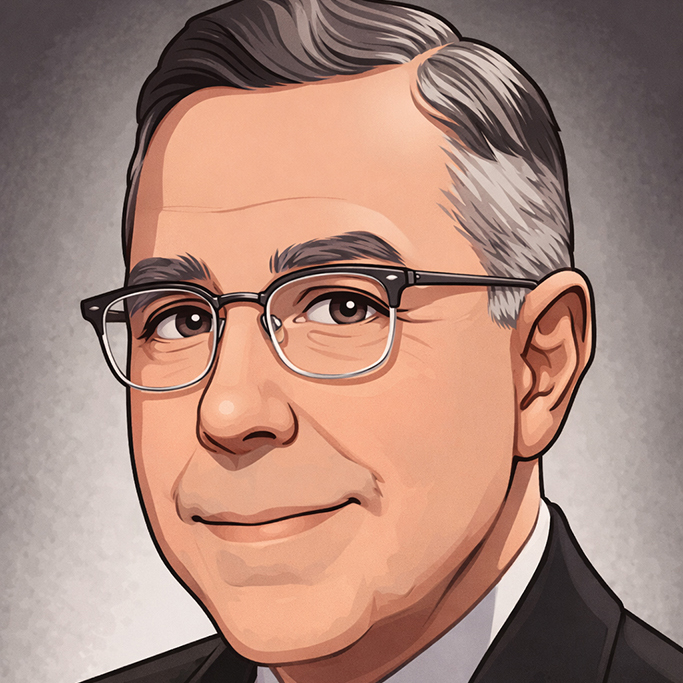
Edward Browning
1927 – Contributed by John B. Rettew III
Prior to the U.S. involvement in W.W. I, <strong>Edward Browning</strong> (1886 – 1927) served in the ambulance corps of the French Army and subsequently transferred to U.S. service when his country declared war.<p>
After the war, with health undermined as a result of gas attacks and exposure sustained in the battle zone, he returned and though in progressively ailing condition, lent himself with great enthusiasm to the formation of Devon Troop 1 (renumbered 50). He threw open the doors of his own home as its rendezvous and headquarters. He firmly believed that Scout training… stood pre-eminent in fostering all those qualities that make for good citizenship, patriotic service and self-sacrifice for the common good. As first scoutmaster of the Troop, he has left behind him an example that is a priceless heritage to Devon 50 and to all its future members.
Pierre S. Dupont
Contributed by Andrew Coe
<strong>P. S. duPont</strong> was president of E.I. du Pont de Nemours & Co. from 1915 to 1919 and chairman of the board from 1919 to 1940. He was also president of General Motors (1920-1923) and chairman (1920-1929), as well as a member of many other major corporate boards. He was also an avid collector of documents on the early history of the Du Pont family and company.
<p>
Pierre Samuel du Pont was born in Wilmington, Delaware, on January 15, 1870. He was one of Lammot du Pont and Mary Belin's eleven children. His father, who had broken away from the family business of producing gunpowder for use in ammunition, was an important figure in the early production of dynamite. Pierre du Pont was fourteen years old when his father died in an explosion. Afterward he took over responsibility for the family, leading several of his brothers to refer to him as "Dad."
<p>
After receiving a bachelor's degree from the Massachusetts Institute of Technology in 1890, du Pont became a chemist in the family firm. In 1899 he took over as president of the Johnson Company in Lorain, Ohio, working with a cousin, Coleman du Pont, and finding a sharp assistant named John J. Raskob. The company was eventually sold, and in 1902 du Pont, his cousin Coleman, and another cousin, Alfred du Pont, purchased and reorganized the family business to prevent it from being sold to a rival firm.
<p>
In 1927, P.S. duPont contributed significant funding for Camp Horseshoe to be purchased and developed by Chester County Council.
Col. Clifton Lisle
Contributed by Andrew Coe
<strong>Colonel Robert Patton Clifton Lisle</strong> was a decorated infantry officer with the 316th Infantry regiment in WWI, commanded by Colonel Hoxie Harrison Smith. Returning from the war in 1919, he became the Scoutmaster of Paoli Troop 1 until 1929. He was one of the first adult Eagle Scouts and the first Council Commissioner. He was awarded the Silver Beaver in 1931. He attended Wood Badge at Gilwell and was acquainted with Baden-Powell, the founder of the Scouting movement.
<p>
Col. Lisle loved the outdoors, making it the basis for the Troop program. He led trips each summer including a hike from Paoli to Camp Rothrock in Carlise, PA. He led the Troop to France and England in 1926 and 1929.
<p>
Col. Lisle was truly a consummate gentleman, a renaissance man, soldier, teacher, author, gardener, and Scoutmaster.<p>
Col. Lisle is seen above fourth from left in the back row.<p>
Fun fact: Col. Clifton Lisle also authored several books, including "Sandy Flash: The Highwayman of Castle Rock". Sandy Flash was the nickname of a Robin-Hood like figure from Revolutionary War-era Chester County, and he was also featured in works from Bayard Taylor. There is a stockade in the Taylor campsite named "Sandy Flash".
<p>
Fun fact: Col. Clifton Lisle is a 1st cousin twice removed of Joseph Wharton, founder of Swarthmore College and for whom the Wharton Business School at University of Pennsylvania is named.
Charles A. Miner
Contributed by Andrew Coe
<strong>Charles Miner</strong> (February 1, 1780 – October 26, 1865) was an anti-slavery advocate and politician who served in the Pennsylvania State House of Representatives from 1807 to 1808 and the United States House of Representatives from 1825 to 1829. He was a member of the Federalist Party. During his terms in Congress, he proposed to end the slave trade in the District of Columbia and gradually abolish slavery across the city.
<p>
Charles Miner was born in Norwich, Connecticut son of Seth Miner and Anna Charlton. He attended the public schools of Norwich and moved with his brother Asher Miner in 1797 to his father's lands in the Wyoming Valley, and to Wilkes-Barre, Pennsylvania, in 1802. He became the publisher of the Luzerne County Federalist.
<p>
Miner was elected as a Federalist to the Pennsylvania House of Representatives and served in 1807 and 1808. He moved to West Chester, Pennsylvania, in 1816. He was elected as an Adams candidate to the Nineteenth and Twentieth Congresses. He was not a candidate for renomination in 1828.
<p>
During his time in Southeastern Pennsylvania, he purchased the "Horseshoe Farm" property in 1822 from Chester County, making Charles Miner the official first private owner of the property.
<p>
He edited and published the Village Record from 1829 to 1832. He returned to Wilkes-Barre in 1834 and became involved in the mining of the large fields of anthracite coal in the Wyoming Valley. He died in Wilkes-Barre in 1865. Interment in Hollenback Cemetery in Wilkes-Barre.
<p>
Miner's essay "Who'll turn Grindstone?", published in the Luzerne Sentinel in 1810, coined the phrase "an ax to grind" as a metaphor for having ulterior personal motives. "When I see a man holding a fat office, sounding 'the horn on the borders,' to call the people to support the man, on whom he depends for his office, Well thinks I, no wonder the man is zealous in his cause, he evidently has a axe to grind."
<p>
Source: https://en.wikipedia.org/wiki/Charles_Miner
Rev. Bentley R. Morrison
1937 – Contributed by Andrew Coe
Horseshoe Scouts today may recognize the name Bentley Morrison in conjunction with the Health Lodge which bears his name. The Morrison Health Lodge was dedicated in memory of <strong>Reverend Bentley R. Morrison</strong> at the 1944 Roberts' Day at Camp Horseshoe. Dignitaries including the Honorable Owen J. Roberts, Associate Justice of the United States Supreme Court and Chairman of the Chester County Council BSA Board of Trustees and Dr. E. K. Fretwell, Chief Scout Executive of the National Council BSA.<p>
Reverend Morrison was the Scoutmaster of Warwick Troop 41 and served on Horseshoe Camp staff in the late 1930's where he ran a Nature Camp for older boys in the Natureheart campsite.
Justice Owen J. Roberts
Contributed by Andrew Coe
<strong>Owen Josephus Roberts</strong> (May 2, 1875 – May 17, 1955) was an Associate Justice of the United States Supreme Court for fifteen years. He also led two Roberts Commissions, the first that investigated the attack on Pearl Harbor and the second that focused on works of cultural value during the war.<p>
Roberts was born in Philadelphia and attended Germantown Academy and the University of Pennsylvania, where he was elected to the Phi Beta Kappa Society and was the editor of The Daily Pennsylvanian. He completed his bachelor's degree in 1895 and went on to graduate at the top of his class from University of Pennsylvania Law School in 1898.<p>
He first gained notice as an assistant district attorney in Philadelphia. He was appointed by President Calvin Coolidge to investigate oil reserve scandals, known as the Teapot Dome scandal. This led to the prosecution and conviction of Albert B. Fall, the former Secretary of the Interior, for bribe-taking.<p>
Roberts served as the Dean of the University of Pennsylvania Law School from 1948 to 1951.
He also served as Chairman of Chester County Council from 1930 until his death in 1955, and Roberts Lodge and Campsite are named after him. There was even a Roberts' Day named after him in 1934.<p>
He died in 1955 at his Chester County, PA farm known as the Strickland-Roberts Homestead after a four-month illness. He was survived by his wife, Elizabeth Caldwell Rogers, and daughter, Elizabeth Hamilton.
R. Frederick Schlaanstine
Contributed by Andrew Coe
<strong>Raymond Fred Schlaanstine</strong> was born in Kenvil, New Jersey on June 23, 1925. He was one of two children. His family moved to Kennett Square Pennsylvania in 1931. His father worked for Hercules Powder Company in Wilmington, Delaware. Raymond liked to be called by his middle name Fred. He graduated from Kennett High School in 1943. Fred was an accomplished viola player, Boy Scout and a member of the New Garden Meeting of the Society of Friends.
<p>
Fred joined the Army in September, 1943. After basic training he was deployed overseas to the European Theater in February, 1944. In a letter home, Fred wrote it's not so bad, except combat. He also said that he had been lucky that only his shovel had been hit.
<p>
The newspaper of Hercules Powder Company, shared the following information on December 8, 1944.
<p><em>
Notification on Saturday, December 2, that Sgt. Raymond Frederick Schlaanstine, Jr., 19 year-old of Synthetics Director of Operations Ray Schlaanstine, was killed in action in France on October 25 has saddened the entire company. Fred had spent his last two civilian summers working at the Experiment Station where his forthright manner, winning personality and fine spirit of cooperation endeared him to all.</em>
<p><em>
Overseas since February, 1944, the tall athletic Fred participated in the fight for the Anzio Beachhead, April 28: the push to Rome, June 5, and was in the first wave to land on the beaches of Southern France on August 15. During the Rome engagement, he distinguished himself for excellence in combat, wining the Infantry Badge, and becoming a private first class.</em>
<p><em>
After Fred's division, the 3rd, then part of the 6th Army Corps, helped to establish the Southern France Beachhead, he was wounded on September 8 at Besancon, France as they pushed up the Rhone Valley. For this he was later awarded the Purple Heart.</em>
<p><em>
After being hospitalized for two weeks he returned to active duty in the Vosges Mountains sector. On October 15 he returned to a rest camp, where he was promoted to Sergeant. His last letter home was written on October 24—the day he again returned to his outfit and active duty.</em>
<p><em>
Fred was the type of boy upon which the Army bases its faith for victory. He had held the 100 and 200 yard dash records a Kennett Consolidated School. He was an Eagle Scout, and had been Assistant Scoutmaster of his Scout troop at Kennett Square. A viola player, he also had represented his school on the All Pennsylvania Orchestra, comprised of outstanding talent from schools throughout the state.</em>
<p><em>
Fred's courage and unusual bravery in action gives us all a deep sense of pride…and of true gratitude. At one time the teen-age lad and another boy came head-on to a German munitions tank—and managed, with typical American Know-how and determination, to blow it up.</em>
<p><em>
Fred had collected and sent home a large number of German trophies: arm bands, watches and insignia. He had hoped, on returning, to study medicine. His basic training at Camp Wheeler in the fall of 1943 delayed his premedical studies.</em>
<p><em>
Home Office shares with the Schlaanstine's their great loss, and their pride in the boy who, in such a brief period, contributed so much to his country's future. And we know that Fred would feel the same way about his father, who in the face of such heart break, was on the job as usual on Monday morning. Many who carried on the business with Ray Schlaanstine were unaware of the tragedy.</em>